
Whenever I visit somewhere, I try to go to the local museum if there is one. I want to understand that place’s history, community and way of life and generally get a feel for the area. It’s more about being nosey than being “cultured”! Over the years I’ve enjoyed museums in everywhere from Aberystwyth to Tenby, Brecon to Wrexham, Pontypridd and Aberdare, and of course my local, Cyfarthfa Castle. All very different, all fascinating, and often quite quirky.
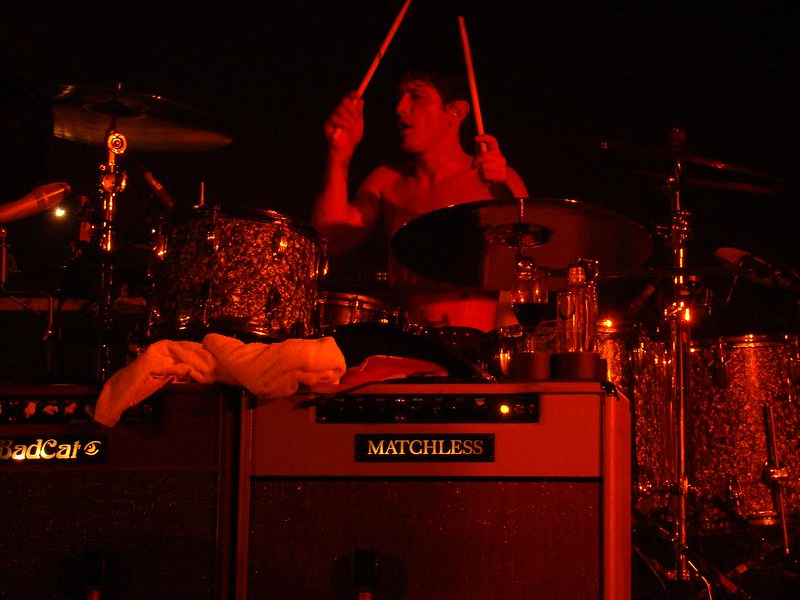
These local museums are a vital part of Wales’s fabric. As well as the usual agricultural implements and Victorian children’s toys, some include important artefacts. The Radnorshire Museum, for example, includes one of the best preserved Sheela-na-gig’s in Britain, while Oriel Ynys Môn includes artwork by Sir Kyffin Williams. And in case you’re wondering about the image at the top of this post, Stuart Cable’s drum kit is a recent addition to the collection at Cynon Valley Museum.
Most important of all, local museums tell the story of the area and its people, and are an expression of who they were and who they are. Local museums at their best should reflect and reinforce local identity, and a network of thriving, diverse local museums seems to me to be as important to Wales as our flagship National Museums.
Whether local museums are valued as much as our National Museums is a moot point. Although Wales was the first nation in the UK to have a museums strategy, a review in 2015, as the strategy ended, concluded that the sector overall was failing. It found that three quarters of local museums did not offer a sustainable service, with passive collections and unchanging exhibitions, limited educational offerings, weak data collection, and isolated staff / volunteers, to name just some of the issues found.
The review made a series of relatively modest recommendations, but it is unclear if they were ever implemented. Publishing your proposals around August bank holiday and just nine months before an election is not a recipe for action. It then took the Deputy Minister seven months to publish a response, just weeks before the end of the government term. It was a masterpiece of fudge, and hardly surprisingly he left any decisions to the next Welsh government. The 2016-2021 government then appeared to do precisely nothing. Local collections of artefacts, our stories and our heritage, were left to their fate.
Despite this neglect, some local museums appear to a casual visitor like me to be thriving, thanks to the dedication of volunteers and staff and in some cases, local authority investment. But many are struggling, with just one symptom of the difficulties they face being their opening hours. For example, the Ebbw Vale Works Museum, which boasts “an extensive archive that celebrates the history of the former steelworks, iron and coal industries, the land and the people who lived and worked in the area” is usually open for just 5 hours on Mondays, Wednesdays and Fridays. It is not alone. Pembroke Museum manages one more day a week, but it too is closed on Saturdays. The museum in Rhayader, CARAD, opens on Saturdays, but is then shut until following Thursday. The state of local collections, exhibitions, education and governance is not known.
Wales’s history is too diverse to be left to the National Museum of Wales alone, important though that institution is. Wales is a nation of towns and villages, and each has its own distinctive story to tell, artefacts to be conserved, and local populations that want to learn. I can only hope that whoever forms the next Welsh government takes local history, heritage and culture seriously and supports a thriving local museums sector.
In the meantime, pop along to a nearby local museum and enjoy it while you can.
Leave a Reply